Uneven Facial Features: How To Assess Them? A Preliminary Self-Assessment Checklist
One commonly used method for observing facial balance is to imagine a vertical line running through the center of the face. Begin by standing in front of a mirror at eye level in a well-lit room. Keep your head straight and imagine a central line extending from the middle of the forehead, through the bridge of the nose and the center of the lips, down to the tip of the chin.
Then, compare the proportions between the left and right sides of the face. Observe whether the distance from the imaginary midline to each side of the facial contour appears relatively similar. This method can provide a more objective overall view of facial proportions.
In addition to the facial midline, facial balance can also be assessed through specific reference points, including the level of both eyebrows, the position of the inner and outer corners of the eyes, the alignment of the corners of the mouth both at rest and when smiling, as well as the contour of the jawline.
If one eyebrow appears higher than the other or the corners of the mouth are elevated unevenly, these differences may indicate variations in the underlying muscle structure or the distribution of subcutaneous fat in those areas.
Many people may feel that their face appears uneven when viewed through a smartphone camera. One contributing factor may be lens distortion, which can alter facial proportions and make them appear different from reality.
For a more accurate assessment, position the phone at eye level and approximately one arm’s length away from the face. Use natural light directed toward the front of the face. Taking a straight-on photograph without tilting the head can provide a more accurate representation of the actual facial structure than photos taken from an upward or downward angle.
What Causes Facial Asymmetry? An Overview Of Possible Causes
Daily habits and repeated behaviors can have a considerable influence on facial appearance. For example, consistently chewing food on only one side of the mouth over an extended period may cause the chewing muscles on that side to work harder and become more developed than those on the opposite side.
Similarly, repeatedly sleeping on the same side can subject one side of the face to prolonged pressure, while frequently resting the chin on one hand may also contribute to subtle changes in facial appearance over time. These habits may gradually influence facial balance without the individual being aware of it.
Imbalances in the underlying soft tissues are another common factor contributing to facial asymmetry. These may include differences in the size or degree of contraction of the muscles around the jaw, as well as uneven accumulation of excess fat around the cheeks and facial contours.
Furthermore, as we age, collagen levels and the degree of skin laxity may change at different rates on each side of the face. This can cause the facial contours to appear less continuous or balanced.
In some cases, facial asymmetry may be directly related to the underlying jawbone structure. This may be present from birth, result from abnormalities in bone development, or be associated with a previous injury or accident.
This type of asymmetry may be more noticeable through an irregular bite alignment or significant deviation of the chin base. Facial asymmetry caused primarily by skeletal structure requires a different approach to assessment and treatment.
What Is Face Lift Design By Dr. Vanda For Restoring Facial Balance?
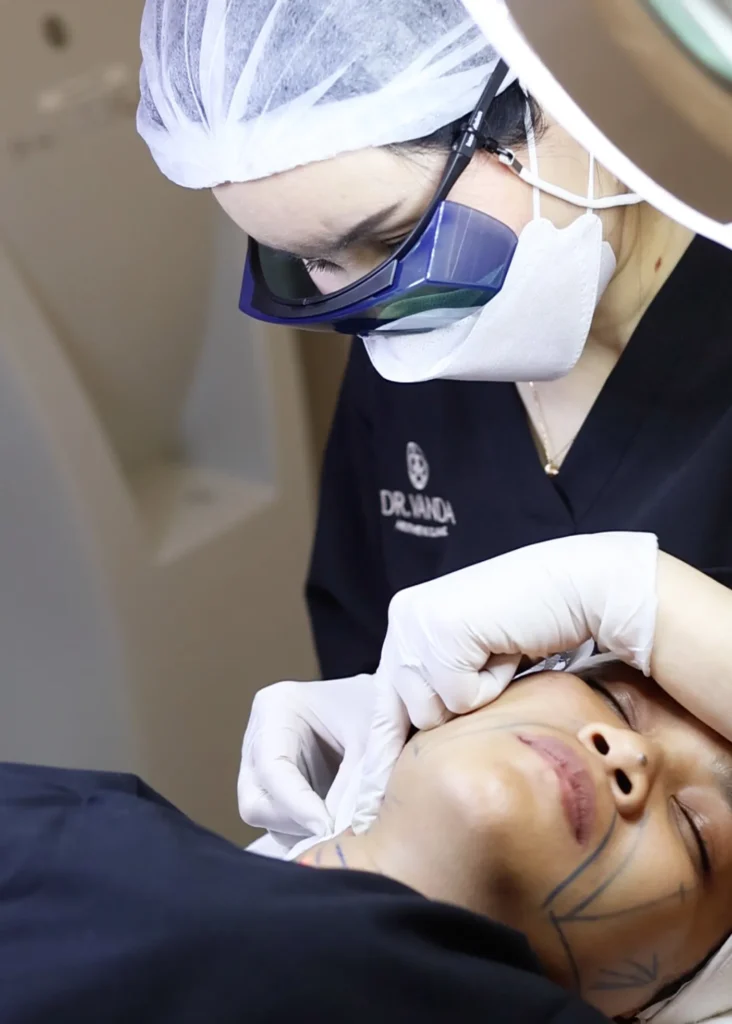
Modern approaches to facial balance have evolved beyond the use of lifting devices alone. They now place greater emphasis on detailed facial analysis, known as Face Lift Design by Dr. Vanda at Dr.Vanda Aesthetic Clinic. This approach focuses on a personalized treatment plan designed to achieve balanced facial contours while complementing each individual’s existing facial structure.
Why Does Facial Contouring Require Personalized Design?
Every face has unique dimensions and different underlying causes of asymmetry. Therefore, applying the same treatment approach to everyone may not provide the most appropriate results.
The Face Lift Design concept focuses on assessing the overall dimensions of the face, including its width, length, and the depth and distribution of the underlying fat layer. This allows specific areas to be addressed according to their individual needs. For example, the side with greater skin laxity may receive an appropriately tailored level of care, helping both sides of the facial contour appear more harmonious and proportionate.
Applying The EndoliftX Light Scan Program
As part of the Face Lift Design process, the EndoliftX Light Scan program may be incorporated to support the management of the skin and underlying tissue structure. The technology uses light energy delivered through a fine fiber directly into the subcutaneous fat layer. It is designed to target localized excess fat while also stimulating new collagen production within the skin.
This allows treatment to be focused on specific areas that require greater tightening or where fat accumulation appears uneven, enabling more targeted care according to the individual’s facial structure.
Facial Contouring Results And Setting Realistic Expectations
The goal of the Face Lift Design technique is to enhance facial symmetry and harmony without making the face appear stiff or noticeably altered. Treatment with the EndoliftX Light Scan program can help gradually improve skin condition and refine the degree of lifting on both sides, helping them appear more balanced.
The resulting appearance can therefore remain subtle and natural while complementing the other features of the face.
When the proportions of the face and facial contours become more balanced, concerns about how the face appears in photographs or from different viewing angles may be reduced. This can help individuals feel more relaxed and confident in their facial expressions.
Whether meeting others or engaging in everyday activities, greater confidence can make it easier to go about daily life without constantly worrying about camera angles or how the face appears from certain perspectives.
Conclusion: Uneven Facial Features Can Be Addressed By Starting With The Right Assessment
Facial asymmetry is a common condition that can occur for various reasons, including daily habits, muscle structure, and the distribution of subcutaneous fat. Conducting a preliminary self-assessment can help individuals better understand their own facial characteristics. However, for a more targeted and appropriate approach, consulting a doctor for a comprehensive assessment of the facial structure is an important first step.
If you have noticed facial asymmetry and are looking for a personalized approach to facial contouring, you can contact Dr.Vanda Aesthetic Clinic for more information or schedule a consultation to discuss and plan your facial contouring with Face Lift Design and the EndoliftX Light Scan program by Dr. Vanda. Together, you can determine the approach that is most suitable for your individual facial structure and concerns.